Showing posts with label platini. Show all posts

Sunday, January 18, 2026

Soccernostalgia Talk Podcast-Episode 244 (Interview with Distinguished Professor Dr. Laurent Bellaiche of University of Arkansas as we discuss AS Saint-Étienne in the years (1976-1984) and the Downfall of Roger Rocher Presidency.)

 This is the 244th episode of my podcast, 'Soccernostalgia Talk Podcast’.


For this episode, I interview Distinguished Professor Dr. Laurent Bellaiche of University of Arkansas as we discuss AS Saint-Étienne in the years (1976-1984) and the Downfall of Roger Rocher Presidency. 


Dr. Bellaiche is also a Professor at Tel Aviv University.


Professor Ballaiche has designed a new class called “Thinking Outside of the Box”, a course that involves science and Football.


For any questions/comments, you may contact us:

You may also contact me on this blog, on twitter @sp1873 and on facebook under Soccernostalgia.

https://linktr.ee/sp1873


Mr. Paul Whittle, @1888letter on twitter and https://the1888letter.com/contact/

https://linktr.ee/BeforeThePremierLeague


You may also follow the podcast on spotify and Apple podcasts all under ‘Soccernostalgia Talk Podcast’

Please leave a review, rate and subscribe if you like the podcast.

Mr. Bellaiche’s contact info:

Email: laurent@uark.edu


Listen on Spotify / Apple Podcasts:

https://open.spotify.com/episode/3OIYu005womkpUyUXjmWGW?si=2S7-DF3RRJOqCej5lSK86A&nd=1&dlsi=ec8c5245f7ed46cb

https://podcasts.apple.com/us/podcast/soccernostalgia-talk-podcast-episode-244-interview/id1601074369?i=1000745681782


Monday, March 6, 2023

Soccer Memories-Part 52, New Italian Serie ‘A’ Foreign Players 1982/83.


Series looking at the new Foreign player signings in the Serie A in the 1980s and their impact.


In the summer of 1982, Italy won the World Cup. This victory also helped to take the already prestigious Serie A to even greater heights.

It was becoming the League that all the big foreign stars were starting to gravitate to.

This summer of 1982 brought its share of new foreign stars, including some who had appeared in the last World Cup.

Defending Champion Juventus made a double signing of two of the biggest World stars of the time.

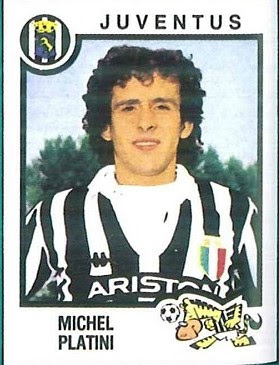
Polish star Zbigniew Boniek arrived from Widzew Lodz. They were forced to offload Republic of Ireland star Liam Brady (to Smapdoria) to get on board St. Etienne star and France National Team Captain Michel Platini.

Danish midfielder Klaus Berggreen joined Pisa from Lyngby.

His Danish compatriot, the striker Søren Skov joined Avellino from Belgian side Cercle Brugge. In addition, Avellino also welcomed Peruvian winger Gerónimo Barbadillo from Tigres UANL.

Barbadillo’s Peruvian teammate Julio César Uribe joined Cagliari from Sporting Cristal.

English star Trevor Francis joined newly promoted side Sampdoria from Manchester City.

Inter Milan signed West German midfielder Hansi Muller from VfB Stuttgart.

Dutch midfielder Jam Peters joined Genoa from AZ’67 Alkmaar.

Polish veteran defender Władysław Żmuda left Widzew Lodz to join newly promoted side Verona.

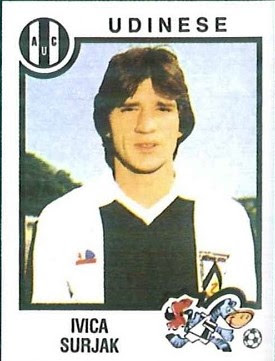
Yugoslav International, the Croatian Ivan Šurjak joined Udinese from French side Paris St, Germain.

 Three Argentines joined the Serie A that season. National team captain Daniel Passarella joined Fiorentina from River Plate. His clubmate at River Plate and striker, Ramon Diaz joined Napoli. Argentine midfielder Patricio Hernandez joined Torino from Estudiantes.

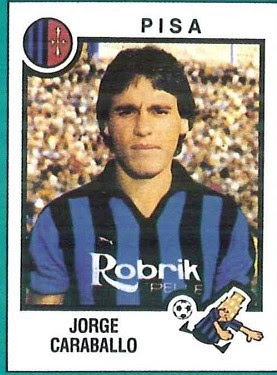
Uruguayan forward Waldemar Victorino joined Cagliari from Nacional Montevideo. His compatriot Jorge Washington Caraballo Larrosa joined Pisa from Danubio.

Oem of the stars of Brazil’s 1978 World Cup, Dirceu José Guimarães joined newly promoted side Verona from Atletico Madrid.

Brazilian defender Edinho joined Udinese from Fluminense.


From this group, Michel Platini would be the greatest success and became one of the greatest players in the World during his time at Juventus.

His first half of his first season was somewhat disappointing, and it took some time for him to settle. By the second half of the season, he was simply irresistible.

In his five years in Italy (until 1987), he won two Scudetti, the Coppa Italia, The Champions Cup and the Cup Winners Cup. He was Capocannoniere for three straight seasons. More importantly, he won the Ballon d’Or for three straight years, during his time at Juventus.


Photo From: 1982-83 Calciatori Panini

(Michel Platini)


His Polish teammate at Juventus, Boniek was less successful, but nevertheless had a good spell in Italy.

His form in the League was not as remarkable as his matches in Europe. This led Gianni Agnelli to refer to him as a ‘Night-Time Beauty.’

He left Juventus in 1985 to join AS Roma for three more seasons (until 1988).


Photo From: 1982-83 Calciatori Panini

(Zbigniew Boniek)


Danish midfielder Klaus Berggreen would have a significant spell in Italy and play for three clubs, in Serie A and B.

He managed to help Pisa to stave off relegation in his first season, but they were relegated in 1984. He stayed one season (1984/85) in Serie B with the side and helped them win promotion back. After one more season with Pisa, he joined AS Roma in 1986 and after one season joined Torino (1987/88 season). He left after a season and re-joined Lyngby to wind down his career.

Danish striker Søren Skov had a disappointing spell at Avellino and failed to score in 16 outings. He would join West German side Hertha Berlin, the following season.


Photo From: 1982-83 Calciatori Panini

(Klaus Berggreen)


Photo From: 1982-83 Calciatori Panini

(Søren Skov)


English forward Trevor Francis would have a long spell in Italy. He was at Sampdoria for four years. He would have one final season with Atalanta (1986/87) before joining Rangers Glasgow, managed by his former Sampdoria teammate Graeme Souness.

West German midfielder Hansi Muller did not reach the heights expected of him at Inter. He remained with the Milanese side for two seasons. He was loaned to newly promoted Como in his last season (1984/85). Afterwards he joined Austrian side Tirol, to wind down his career in 1990.

Dutch midfielder Jan Peters’ four years in Italy were divided between Serie A and B. He suffered relegation with Genoa in 1984. He remained with Genoa in Serie B for one season and then joined Atalanta (1985/86 season) for one last season.

He returned to Holland in 1986 to join NEC in the final phase of his career.


Photo From: 1982-83 Calciatori Panini

(Trevor Francis)


Photo From: 1982-83 Calciatori Panini

(Hansi Muller)


Photo From: 1982-83 Calciatori Panini

(Jan Peters)


Polish defender Władysław Żmuda was at Verona for two seasons. He joined New York Cosmos for a brief spell, before returning to the Serie A and joined Cremonese during the 1984/85 season. He was relegated with the side and remained in the Serie B with the side until 1987.

The Peruvian Gerónimo Barbadillo’s move was crucial. He stayed at Avellino for three seasons. He then joined Udinese for one last season in Serie A (1985/86).

He has since remained in the peninsula and calls Italy his home until today.

His Peruvian compatriot Julio César Uribe was less successful with Cagliari and suffered relegation in this first season. He would nevertheless remain with Cagliari in Serie B until 1985, before returning to Peru.


Photo From: 1982-83 Calciatori Panini

(Władysław Żmuda)


Photo From: 1982-83 Calciatori Panini

(Gerónimo Barbadillo)


Photo From: 1982-83 Calciatori Panini

(Julio César Uribe)


Yugoslavian (actually Croatian) Ivica Šurjak’s spell in Italy would only consist of a single season at Udinese, where he managed only two goals.

After a season of inactivity, he joined Real Zaragoza for one last season (1984/85).


Photo From: 1982-83 Calciatori Panini
(Ivica Šurjak)

 Patricio Hernandez spent two seasons at Torino before joining Ascoli for one last season in Italy (1984/85). He then returned home to join River Plate.

Daniel Passarella would have a successful six seasons in Italy despite not winning titles. He spent four years at Fiorentina before two final seasons at Internazionale Milano (1986-87 and 1987-88). He returned home to River Plate in 1988.

Ramon Diaz would have a successful seven-year spell in Italy. His first and only season at Napoli was not impressive (3 goals only). He bounced back after joining Avellino (1983/84) and scored 22 goals in three seasons.

He then spent two seasons at Fiorentina (scoring 17 goals). He capped off his Italian career as a member of the Scudetto winning side of Internazionale Milano (1988/89) that ran away with the title with Diaz scoring 12 goals. He left at the end of that season to join French side AS Monaco.


Photo From: 1982-83 Calciatori Panini

(Patricio Hernandez)


Photo From: 1982-83 Calciatori Panini

(Daniel Passarella)


Photo From: 1982-83 Calciatori Panini

(Ramon Diaz)


Waldemar Victorino last only one season at Cagliari as the side were relegated. He managed only 10 appearances with no goals and joined Argentine side Newell’s Old Boys in 1983.

Jorge Caraballo also lasted one season with Pisa and joined Ecuadorian side Machala in 1983.

Dirceu would spend many years in Italy with various clubs in one-season stints. After his season with Verona, he joined Napoli (1983/84), Ascoli (1984/85), Como (1985/86) and Avellino (1986/87) before returning home to Brazil.

He was sadly killed in a traffic accident on September 15, 1995, aged just 43.

Edinho manage to stay in Italy and Udinese for five years. He left in 1987 after the side was relegated to return home and join Flamengo.

In the following seasons more stars would join the Serie A, including Brazilians who had impressed in the 1982 World Cup.


Photo From: 1982-83 Calciatori Panini

(Waldemar Victorino)


Photo From: 1982-83 Calciatori Panini

(Jorge Caraballo)


Photo From: 1982-83 Calciatori Panini

(Dirceu)


Photo From: 1982-83 Calciatori Panini

(Edinho)


Thursday, November 17, 2022

International Head-to-Head –Part 12, Denmark and France (with a video Interview with Italian Author and former Freelance Journalist Mr. Davide Eskelund Rota)


The World Cup is nearly here with Denmark facing France in the First Round. This will be the fifth time the sides will have met in a World Cup setting.


In anticipation, or this Blog Presentation with an interview, I look back at the past encounters between the Nations.

The Interview will be as a video link companion, while the Blog will be a presentation of the events.


The Interviewee is:

Mr. Mr. Davide Eskelund Rota


Mr. Davide Eskelund Rota is an Italian, former freelance journalist in Biella (Italy), living in Odense (Denmark) from 2013, working as a languages teacher.


He is the author of “Danmark (1908-2018)” chronicling the history of the Danish National Team.

Mr. Rota has appeared before on the podcast discussing the matches of the Denmark National team and also participated in written interviews about the matches of the Italian national team under Vittorio Pozzo.


Mr. Davide Eskelund Rota’s contact info:

Facebook: https://www.facebook.com/davide.rota.311


Link to his book:

https://www.soccer-books.co.uk/acatalog/Danmark-1908-2018-Landsholdets-Historie--Denmark-National-Team-Statistics--10493.html


My contact information:

on twitter @sp1873 and on facebook under Soccernostalgia.

https://linktr.ee/sp1873


1900s

The first matches between the nations were during the 1908 Olympics in London. In fact, for Denmark, these were their very first International matches in their history.

Denmark faced both France B and A sides in space of three days. The first match between Denmark and France ‘B’ side was on October 19, 1908, with Denmark winning (9-0). On October 22, 1908, Denmark inflicted an even heavier defeat to the main French side (17-1). This is France’s record heavy defeat. Denmark’s Sophus Nielsen scored 10 of the goals. This was a record that stood for nearly a century.


Photo From: IFFHS, Danmark (1908-1940), Sverige (1908-10940)

(Denmark squad 1908 Olympics)


1970s

The sides did not face one another for more than six decades. A span that included two World Wars. They faced off in two friendlies in the 1970s.

On November 21, 1973, at Paris, France defeated the Danes (3-0). This was France’s first win over Denmark and first match on French soil.

On September 1, 1976. at Copenhagen, the sides played to a (1-1) tie. This was the first tied match in the series.

Michel Platini scoring the tying goal near the end. Platini would score against the Danes in 1983 and 1984 as well and manage France against them in 1992.

Morten Olsen playing in both of these matches in the decade vs. France as well in 1984. He later managed Denmark in the matches vs. France (2001 to 2015).


Photo From: Capitaines des bleus depuis 1904, Author Vincent Duluc

(November 21, 1973, France 3-Denmark 0)


1980s

It was during this decade that both sides became powers at World Football. On September 7, 1983, at Copenhagen, Denmark defeated France (3-1). This was Denmark’s first win on home soil in the series.

Michael Laudrup scored twice and he would also score during the 1998 World Cup against France.

A few months later, on June 12, 1984, at Paris the sides faced off at the 1984 Euros hosted in France. France won (1-0) with a goal by Platini deflected by Soren Busk’s head. This was the first competitive match between the Nations. They would face each other in 1992, 2000 Euros and 1998, 2002 and 2018 World Cups.


Photo From: Mondial, new series, issue 43, October1983

(September 7, 1983, Denmark 3-France 1)


Photo From: Mondial, new series, issue 43, October1983

(September 7, 1983, Denmark 3-France 1)


Photo From: Mondial, new series, issue 43, October1983

(September 7, 1983, Denmark 3-France 1)


Photo From:  Mondial, new series, issue 52, July 1984 
(June 12, 1984, UEFA European Championship, France 1-Denmark 0)


Photo From:  Mondial, new series, issue 52, July 1984 
(June 12, 1984, UEFA European Championship, France 1-Denmark 0)


Photo From:  Mondial, new series, issue 52, July 1984 
(June 12, 1984, UEFA European Championship, France 1-Denmark 0)


Photo From:  Mondial, new series, issue 52, July 1984 
(June 12, 1984, UEFA European Championship, France 1-Denmark 0)


Photo From:  Mondial, new series, issue 52, July 1984 
(June 12, 1984, UEFA European Championship, France 1-Denmark 0)


1990s

The sides faced each other three times in the decade in mostly competitive matches.

On June 17, 1992, at Malmö in Sweden, during the 1992 Euros, Denmark defeated France (2-1) to advance and eliminate France from the Group stage. This was Michel Platini’s last match as France National Team Manager.

On November 9, 1996, at Copenhagen, Denmark defeated France (1-0) in a friendly. This was France Manager Aime Jacquet’s first loss since taking over in 1994.

During the 1998 World Cup, hosted by France, the sides met in a Group stage match in Lyon on June 24, 1998. France, already qualified to the next round, gave a run out to some of its reserves and won (2-1).


Photo From: France Football, Issue 2411, June 24, 1992

(June 17, 1992, UEFA European Championship, Denmark 2-France 1)


Photo From: Onze-Mondial, Issue 98, March 1997

(November 9, 1996, Denmark 1-France 0)


Photo From: France Football, Issue 2724bis, June 26, 1998

(June 24, 1998, World Cup, France 2-Denmark 1)


Photo From: Onze-Mondial, Issue 114, July 1998

(June 24, 1998, World Cup, France 2-Denmark 1)


2000s

The sides met four times during this decade. On June 11, 2000, at Brugge in Belgium, France defeated Denmark (3-0) in a Euro 2000 Group phase match.

This was the Third time the sides had met in the Euros.

In the following year, at Nantes, the sides met in a friendly on August 15, 2001. France won (1-0) through a Robert Pires goal.

During the 2002 World Cup, on June 11, 2002, at Incheon, South Korea, Denmark defeated France (2-0) and eliminated the defending World Cup Champions.

On May 31, 2006, at Lens, France defeated Denmark (2-0) in a preparatory friendly ahead of World Cup 2006.


Photo From: L’Equipe, L’Equipe de France de Football, la Belle Histoire

(June 11, 2000, UEFA European Championship, France 3-Denmark 0)


Photo From: France Football, Issue 2888bis, August 17, 2001

(August 15, 2001, France 1-Denmark 0)


Photo From: Onze-Mondial, Issue 162, July 2002

(June 11, 2002, World Cup, Denmark 2-France 0)


Photo From: France Football, Issue 3138bis, June 2, 2006

(May 31, 2006, France 2-Denmark 0)


2010s

The sides faced off three times in this decade. On March 29, 2015, in a friendly at Saint-Etienne, France defeated Denmark (2-0).

A few months later, on October 11, 2015, at Copenhagen, France won (2-1) through a double by Olivier Giroud (he also scored in the match in March).

This was France’s first ever win on Danish soil.

The sides met at Moscow, during the 2018 World Cup in Russia on June 26, 2018. The match ended in a scoreless tie. This was the Third time the sides had met in a World Cup.


Photo From: L’Equipe, Year 69, No 22169, Monday March 30, 2015

(March 29, 2015, France 2-Denmark 0)


Photo From: L’Equipe, Year 73, No 23346, Wednesday June 27, 2018

(June 26, 2018, World Cup, France 0-Denmark 0)


2020s

The sides faced one another twice as part of the UEFA Nations League. On June 3, 2022, at Saint Denis, Denmark defeated France (2-1) through a double strike by Andreas Cornelius. This was Denmark’s first ever win over France on French soil.

A few months, for the return fixture at Copenhagen, on September 25, 2022, Denmark once again were victorious (2-0).


Photo From: L’Equipe, Year 77, No 24766, Saturday June 4, 2022

(June 3, 2022, UEFA Nations League, France 1- Denmark 2)


Photo From: L’Equipe, Year 77, No 24880, Monday September 26, 2022

(September 25, 2022, UEFA Nations League, Denmark 2- France 0)


Photo From: L’Equipe, Year 77, No 24880, Monday September 26, 2022

(September 25, 2022, UEFA Nations League, Denmark 2- France 0)


Conclusion

On balance, the sides appear to be equal with eight wins for each side in 18 matches.

The goal difference is better for Denmark because of the (17-1) win in 1908.

The sides seldom met until the 1970s, but in the last four decades the frequency of the meetings have increased.

The sides have met one another on multiple occasions in the Finals of major Tournaments.

France has somewhat the edge in terms of winning International Tournaments during this period.

In terms of importance, the 1984 Euros opener and the 2002 World Cup match that eliminated France stand out for historical reasons.

The meeting in the upcoming 2002 World Cup will be the fourth time, the sides will have met in a World Cup Group stage (1998, 2002, 2018 previously).


Note:

1-Please refer to the video link at the top of this blog upload for the interview.